

03
February
2026
|
04:30 AM
America/Los_Angeles
X-rays, CT scans and MRIs — what’s the difference?
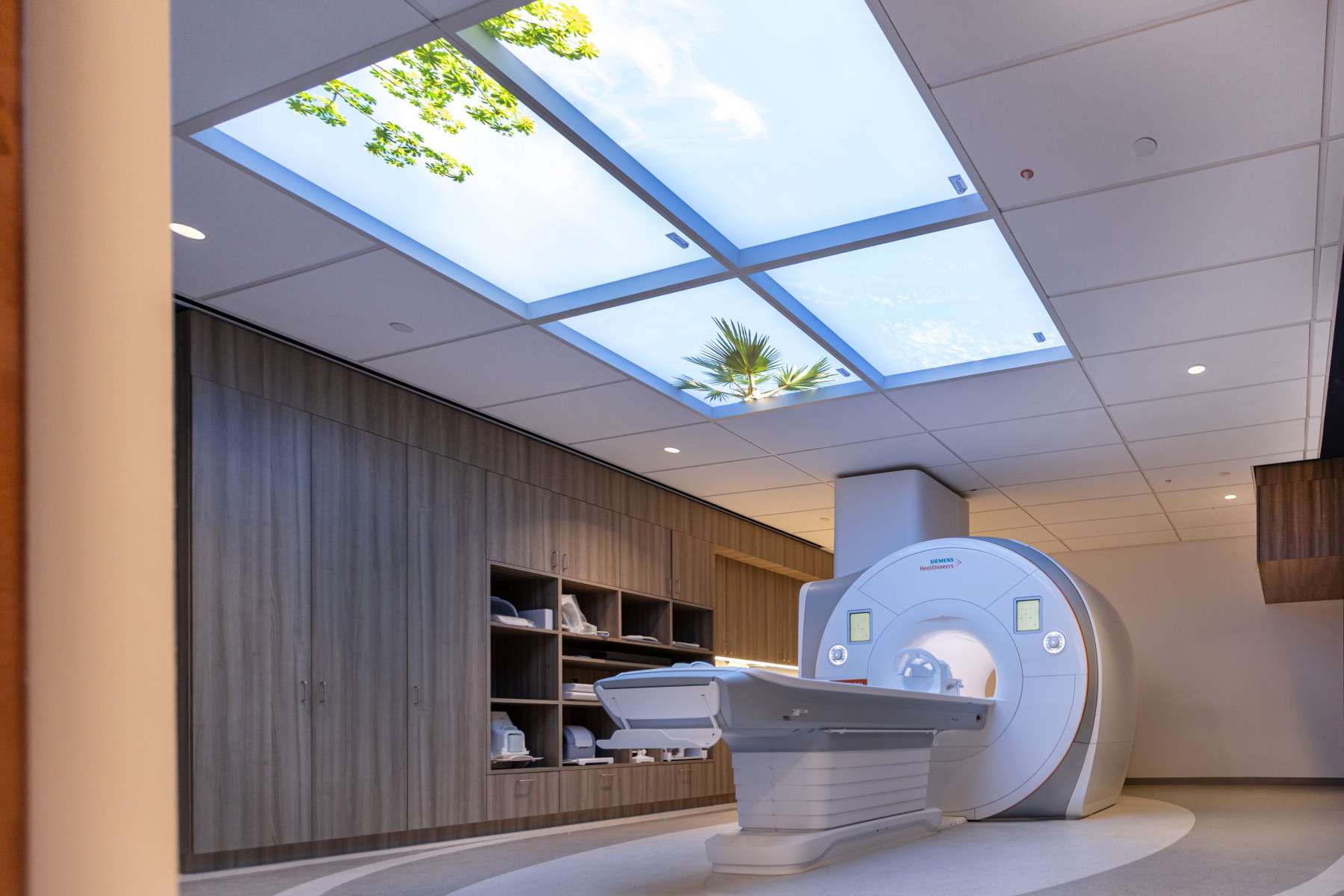
Keck Medicine of USC Pasadena medical office building general imaging MRI
Photo by: Ricardo Carrasco III
Every day, patients receive imaging, but most of us don’t know the difference between the technologies. Summer Decker, PhD, who leads 3D imaging with Keck Medicine of USC and serves as director of the USC Center for Innovation in Medical Visualization with the Keck School of Medicine of USC, breaks down common scans you may encounter at your doctor’s office.
- Ultrasound scans show structures inside the body using high-intensity sound waves. They are often used during pregnancy or for diagnosing conditions such as gallstones and kidney stones.
- X-ray scans use X-rays, a type of electromagnetic radiation, to create black and white two-dimensional images of the body through shadows formed by the different tissues in the body. They are often used to spot broken bones and injuries and locate abnormal masses.
- CT (computed tomography) scans combine X-rays and a computer to take detailed 3D cross-sectional images of the body, providing in-depth views of organs, soft tissues and blood vessels. They are used to detect conditions such as brain injuries, heart disease and tumors, and are more powerful and detailed than X-rays.
- MRI (magnetic resonance imaging) scans use magnets and radio waves rather than radiation to create 3D pictures. Certain structures can be seen more clearly on an MRI than X-rays or CT scans, such as the brain, spinal cord, nerves and muscles.
- MRA (magnetic resonance angiography or magnetic resonance angiogram) scans are a type of MRI that looks specifically at the body’s blood vessels. They are less invasive but often just as effective as a traditional angiogram, which requires inserting a catheter into the body.
- PET (positron emission tomography) scans use a small amount of radioactive material, called a tracer, to visualize and measure activity in tissues and organs. They detect how cells are working, helping doctors diagnose cancers, evaluate heart disease and study brain disorders.